

TRADING CRITIQUE LOGO
  • Broker Review
    photo 2026 04 10 22 58 17 1

    How Spread Betting Works on Capital.com

    By
    Johnsi Mary
    charles stanley direct review

    How to Contact Charles Stanley Direct Customer Service 2026

    By
    Ranjitha Manoj
    ox securities

    Is OX Securities Good for Trading? Full 2026 Review

    By
    Narmadha karthick
    Hugo’s Way Review

    Is Hugo’s Way Safe or Scam in 2026? Full Broker Review

    By
    Narmadha karthick
    fusion markets mobile app review

    Fusion Markets Mobile App Review 2026: Features & How to Use

    By
    Trading Critique
    Screenshot from the Home page of the Sharekhan website

    Sharekhan – 2023 Updated Broker Review and Full Guide

    By
    Trading Critique
  • Trading
    80% of cfd brokers

    Why Do 80% of CFD Traders Lose Money? Key Mistakes 2026

    By
    Krishnaveni Thangapandian
    Online-Trading-1

    Start Trading from Scratch: Tips for Online & Stock Trading

    By
    Trading Critique
    spoofing in trading

    Spoofing in Trading 2026: How It Works & Detection

    By
    Johnsi Mary
    Trading

    Day Trading or Swing Trading: What Works Best in 2026?

    By
    Narmadha karthick
    overnight

    What Are Overnight Fees in CFD Trading? Examples Explained

    By
    Subhashini Vignesh
    day trading strategies

    Top 7 Day Trading Strategies to Boost Your Profits in 2026

    By
    Trading Critique
  • Stocks
    penny stocks

    Penny Stocks 2026: How They Work, Risks & Investing Tips

    By
    Trading Critique
    24 hour stock trading

    What Is 24-Hour Stock Trading in 2026? Full Guide

    By
    Narmadha karthick
    The Image shows the Logo of NSE Now with Discontinued Stamp on it

    NSE NOW Review 2026: Features, Shutdown & Alternatives

    By
    Trading Critique
    How to Buy Stock without a Broker

    How to Buy Stocks Without a Broker in 2026? 4 Smart Ways

    By
    Trading Critique
    What It Is, Types, Regulations & More Stock Market in India

    Indian Stock Market 2026: How It Works and Complete Guide

    By
    Trading Critique
    NYSE

    What Is New York Stock Exchange (NYSE) and How Does It Work?

    By
    Trading Critique
  • About Us
    • About Us
    • Methodology
    • Contact Us
Broker Finder
Compare Broker
  • 🔥
  • Broker Review
  • Forex
  • Investing
  • Trading
  • UK
  • Stocks
  • Banking
  • Finance
Tuesday, 16 Jun 2026
TradingCritiqueTradingCritique
Search
  • Home
  • Categories
    • Broker Review
    • Forex
    • Crypto
    • Trading
    • Investing
    • Stocks
    • Finance
    • Banking
  • Contact Us
  • Broker Finder
  • Compare Broker
Follow US
© 2026 Trading Critique. All Rights Reserved | Designed By RepuNEXT

Home - Forex - Stop Loss in Forex 2026: Set, Use & Avoid Major Losses

Stop Loss in Forex 2026: Set, Use & Avoid Major Losses

Last updated: May 12, 2026 10:42 am
By
Ranjitha Manoj - Financial Research Analyst
11 Min Read
Contents
  • What is stop loss in Forex trading?       
  • How to set and calculate stop loss in Forex trading
  • How to avoid losses in forex trading using stop loss in
  • Is trailing stop loss better than fixed stop loss?
  • Conclusion
  • Frequently Asked Questions
2 years agoDecember 30, 2023 9:30 pm

What is stop loss in Forex trading 2026? A stop loss in forex trading is a tool that helps limit your losses by automatically closing your trade if the market moves against you. In this article, we’ll walk through how to set stop loss in forex trading, stop loss calculation, and how to use it effectively to reduce risk and avoid major losses in 2026.


Quick insights

  • A stop loss automatically closes your trade if the market moves against you, helping limit losses and protect your capital, especially during volatile market conditions.
  • From fixed and trailing stop losses to using support/resistance or indicators like ATR, traders can tailor their stop loss approach based on their trading style.
  • Using a stop loss alone isn’t enough pair it with proper risk-reward ratios, avoid overleveraging, and stick to a plan to trade smarter and safer in 2026.

What is stop loss in Forex trading?       

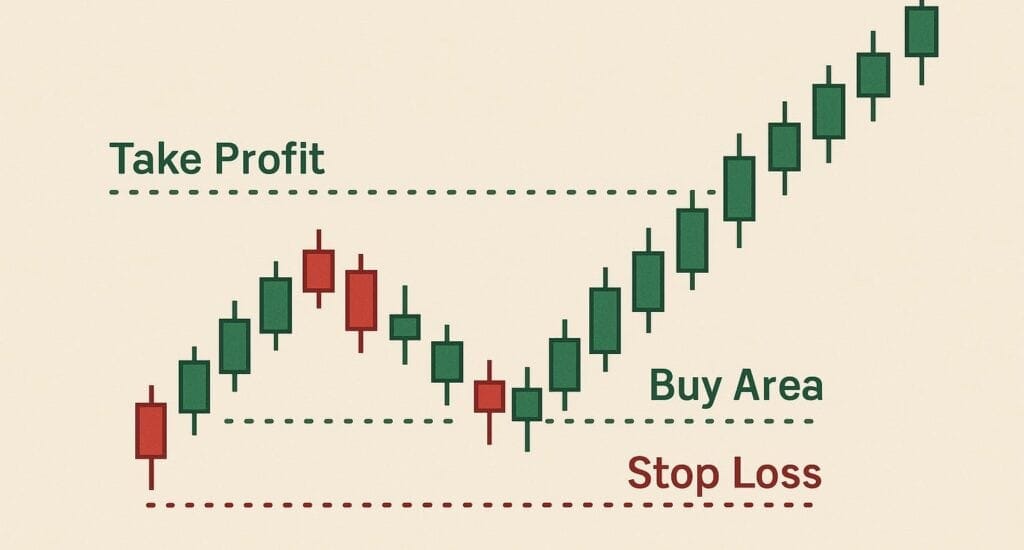
A stop loss in Forex trading is a tool that helps you avoid losing too much money. It works by closing your trade automatically if the market goes the wrong way.

There are two primary types of stop loss orders in Forex trading:

  • Fixed stop loss – This is a specific number of pips set when entering the trade. It doesn’t change, no matter how the market moves.
  • Trailing stop loss – This type of stop loss moves along with the market when it moves in your favor. If the market reverses, the stop loss stays at the new level, locking in some profits while still protecting you from losses.
Stop loss 2

Can you avoid losses with just a stop loss? No, it helps reduce risk, but you also need a smart strategy and solid market analysis. Stop loss is especially necessary in every trade to avoid large, unexpected losses, especially during high volatility or market gaps..


How to set and calculate stop loss in Forex trading

  • Setting a stop loss involves determining the maximum amount of money you are willing to risk on a particular trade. This is your risk amount.
  • You then need to identify the stop loss distance, typically measured in pips, which represents how far the price can move against you before triggering the stop loss.
  • This distance is often determined by technical analysis, such as identifying support and resistance levels, recent highs or lows, or using technical indicators.
  • Some traders may also opt for a fixed number of pips based on their trading strategy.
  • Once you’ve decided on your risk amount and the appropriate stop loss distance (in pips), you can calculate the appropriate lot size for your trade using the following formula:

Lot size = Risk amount ÷ (Stop loss in pips × pip value)

  • Placing your stop loss at a logical level, informed by market structure or technical analysis, is crucial for protecting your account and adhering to your trading plan.

Read more: How is P/L calculated in Forex trading


How to avoid losses in forex trading using stop loss in 2026

Effectively using stop losses is key to avoiding significant losses. Here are several strategies to consider:

Fixed stop loss

You set a fixed amount or percentage you are willing to lose before entering the trade. For example, you decide to risk 1% of your account per trade and set your stop loss accordingly.

Support and resistance stop loss

Place the stop loss just below a support level (if buying) or above a resistance level (if selling). The idea is that if the price breaks that level, the trade idea is likely wrong.

Moving average stop loss

Use a moving average line (like the 50-day or 200-day MA) as a dynamic stop loss point. If the price crosses the moving average against your position, you exit.

Volatility-based stop loss

Set the stop loss based on how much the price normally moves. For example, use the average true range (ATR) indicator to give the trade enough room to breathe without closing too early.

Trailing stop loss

The stop loss moves with the price in your favor, locking in profits. For example, if the price moves up, the stop loss moves up by a set amount or percentage but does not move back down.

Time-based stop loss

Close the trade after a certain time if it hasn’t moved in your favor. This is useful for short-term trades to avoid holding losing positions too long.

Chart pattern stop loss

Place the stop loss beyond the key level of a chart pattern (like the breakout point of a triangle or head and shoulders pattern).

Use proper risk-reward ratio

A good strategy is to use a 1:2 or 1:3 risk-reward ratio. This way, even if you lose some trades, you still stay profitable.

Avoid overleveraging

Using high leverage can quickly wipe out your account. Use smaller lot sizes and combine them with stop loss.

Check news and market events

Avoid trading before or during big news if you’re unsure. Market spikes can trigger losses quickly.

Backtest and learn

Use demo accounts or historical data to test your stop loss strategy. Learn what works best for your style.

Read more: The risk of Forex trading: Expert strategies to manage, reduce and avoid


Is trailing stop loss better than fixed stop loss?

Yes. A trailing stop loss adjusts as the price moves in your favor, helping to lock in profits. While a fixed stop loss is easier to set, it doesn’t adapt to market movement. Use trailing stop loss in trending conditions and fixed stop loss for range-bound or scalping trades.


Conclusion

Using a stop loss is a must in Forex trading. It helps protect your money, manage risk, and avoid big losses. Whether you use a fixed or trailing stop loss, always set it based on your strategy and market conditions. Stay disciplined, use smart risk management, and you’ll trade more safely and confidently in 2026.

Pro tip

Always use a stop loss and never risk more than 1–2% of your account on one trade. It protects your money and helps you trade smarter in 2026. Use our broker finder tool to compare the best Forex brokers and stay updated on CFDs, stocks, and crypto for smarter trading decisions. Share your experience in the comments below!


Frequently Asked Questions

1.     Can I recover losses in forex trading?

Yes, with discipline, strong risk management, and a solid trading strategy, you can recover losses in forex over time. Review past trades and avoid emotional decisions.

2.     Can stop loss guarantee no losses in forex?

No. It limits your loss but can’t fully prevent it, especially during high volatility or price gaps, which may cause slippage.

3.     Is stop loss necessary in every trade?

Absolutely. It’s a critical part of every forex trade to protect your capital and limit risk.

4.     Should beginners use stop loss in forex trading?

Yes. Beginners should always use stop loss to avoid major losses and learn proper risk management.

5.     Is stop loss placement different for scalping and swing trading?

Yes. Scalping requires tighter stop loss (5–15 pips), while swing trading uses wider stops (30–100 pips).

6.     How much stop loss is ideal for a $1,000 forex account?

With the 2% risk rule, your max stop loss should be $20 per trade. Adjust lot size and pip value accordingly.

7.     How many pips should your stop loss be?

It depends on strategy. Usually, it ranges from 20 to 100 pips. Use tools like ATR to set realistic levels.

8.     How much can you lose with a 2% stop loss rule?

Just 2% of your account per trade—$20 on a $1,000 account. This protects your balance from rapid depletion.

9.     How do brokers handle stop loss in gap scenarios?

If a gap occurs, your stop loss may trigger at the next available price. This is called slippage and may result in a slightly larger loss.

10.  How is stop loss executed during high volatility?

During high volatility, stop loss orders might not fill at the exact price. Expect slippage during major news events or market spikes.

11.   How do I set a stop loss based on ATR (Average True Range)?

Multiply the current ATR value by 1.5 to 2. If ATR is 20 pips, set stop loss at 30–40 pips from your entry.


ByRanjitha Manoj
Financial Research Analyst
Financial Research Analyst at TradingCritique
ANALYST SINCE: 2022, FOCUS: Broker evaluation, Platform analysis
Previous Article groww Groww Review 2026: Is It the Best & Safe App for Beginners?
Next Article Eightcap Trading How to Use Eightcap Trading Tools for Maximum Profit

Our Latest Contents

Stay updated with our newest insights and guides!

Groww vs Zerodha: Which Broker Should You Choose in 2026?

Read More

Firstrade 2026 Review: Zero Fees and Honest Verdict

Read More

StormGain Review 2026: What Traders Need to Know Before

Read More

Top Broker Reviews

Discover brokers trusted by global traders.

Is Hugo’s Way Safe or Scam in 2026? Full Broker Review

Read More

Degiro Broker Review 2026: All You Need to Know (Updated)*

Read More

BDSwiss Broker Review 2026: Pros, Cons & Key Features

Read More

Knowledge Hub

8 Proven Crypto Trading Strategies to Boost Your Profits

Read More

Revolutionary Shifts Await: Cryptocurrency Braces for a $6 Trillion Impact in 2024 after XRP-Powered Bitcoin and Ethereum Surge

Read More

This Acquisition Is a Signal to Competitors

Read More
- Advertisement -
Ad image

You Might Also Like

More Posts
day trading strategies
Trading

Top 7 Day Trading Strategies to Boost Your Profits in 2026

By
Trading Critique
Videforex vs Pocket Option
Broker Review

Videforex vs Pocket Option – Which is Better in 2026?

By
Johnsi Mary
poocoin review
Broker Review

Is PooCoin Safe in 2026? Features, Pricing & Review

By
Johnsi Mary
July 4th Forex trading hours
Forex

July 4 Forex Trading Hours: Which Markets Are Open/Closed?

By
Johnsi Mary
TradingCritique
Facebook Instagram Youtube
Top Categories
  • Trading
  • Forex
  • Crypto
  • Stocks
  • Investment
  • Finance
Quick review
  • Plus500
  • Forex.com
  • Exness
  • City Index
  • Tickmill
  • Trade Nation
  • EC Markets
  • HFM
  • AvaTrade
  • Eightcap
Brokers by country
  • Best UK Brokers
  • Best US Brokers
  • Best South Africa Brokers
  • Best Thailand Brokers
  • Best Brazil Brokers
  • Best Canada Brokers
Trading guides and brokers' picks
  • Avoiding Forex Scams
  • RSI Strategies 2026
  • Crypto Scam Alerts
  • Stop Loss & Take Profit Tips
  • Best Low Deposit Brokers
  • Best CFD Brokers 2026
Scam Brokers
  • V999
  • EverFX
  • Mabcredit
  • Mintra Trade
  • FXPremium
  • Banxa

Disclaimer

 TradingCritique gives expert guidance to help you choose the right broker and manage your investments. Remember, trading forex, crypto, CFDs, indices, and commodities is risky and not for everyone. Always check your finances, experience, and risk level before investing, and consult a licensed financial advisor if needed. Every trade involves risk, so approach your trading with care and never invest more than you can afford to lose.

Advertiser Disclosure

At TradingCritique, our reviews, comparisons, and trading guides are based on independent research and verified information from reliable sources. We earn a commission when you use links from our partner brokers, at no additional cost to you. This does not influence our ratings, recommendations, or editorial opinions in any way. Our mission is to maintain honest, accurate, and transparent content to help traders make informed financial decisions.

Who we are
  • About Us
  • Our Story
  • Our Team
  • Our Methodology
  • Contact Us

Terms & Conditions | Privacy Policy

© 2026 Trading Critique .All Rights Reserved

Username or Email Address
Password

Lost your password?